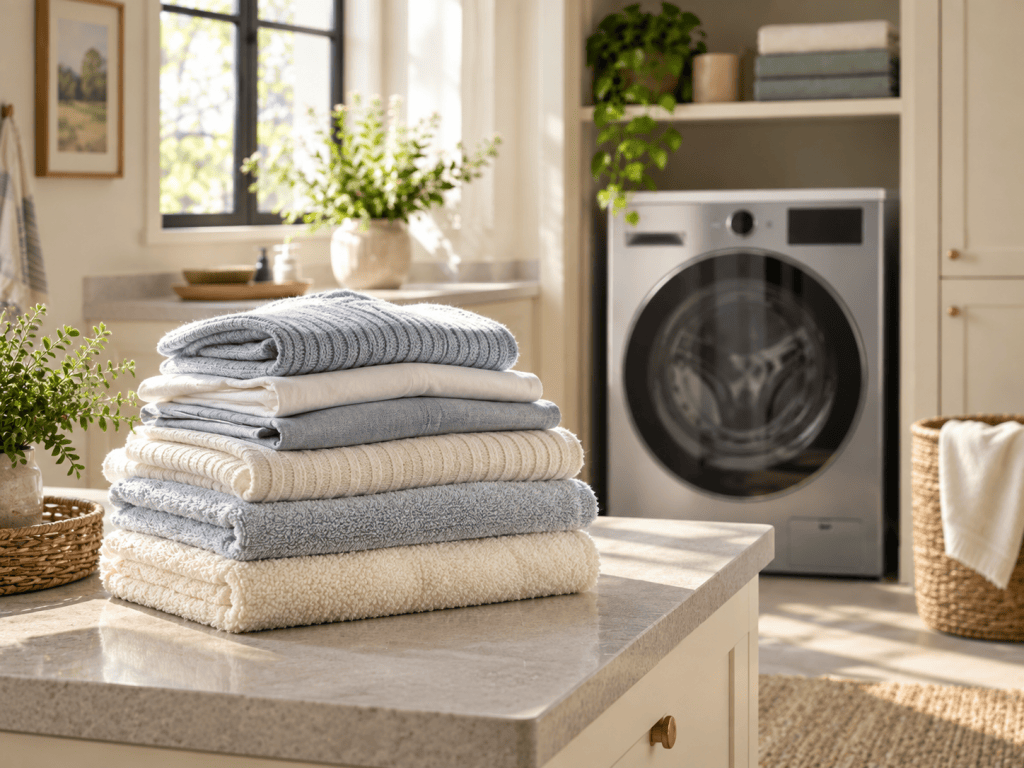
Washer dryer combos can be worth it if you want to save space, skip transferring loads, or need ventless installation. They are especially useful in condos, apartments, laundry closets or as secondary laundry machines. The tradeoff is that full wash-and-dry cycles can take longer, and you cannot wash one load while drying another.
Laundry appliances have traditionally come in pairs. You wash everything in one machine, move it next door, then start the drying process.
An all-in-one washer and dryer changes that traditional routine. The same drum washes the clothes and then dries them, so you can put in a load, choose a wash cycle and a dry cycle and come back when it is finished.
That sounds almost too convenient, which leads to the obvious question: Are washer dryer combos actually worth it?
For some households, absolutely. For others, a traditional washer and dryer will still make more sense. The decision largely comes down to your space, how much laundry you do and what you expect from your laundry routine.
If you’re beginning a larger laundry room update, you can also compare your options in our washer and dryer selection.
What is a washer dryer combo?
A washer dryer combo, sometimes called an all-in-one washer dryer, combines both functions into one appliance.
Unlike a stacked washer and dryer, which still contains two separate machines, a combo uses a single drum. Once the wash portion of the cycle ends, the appliance begins drying without requiring you to move anything.
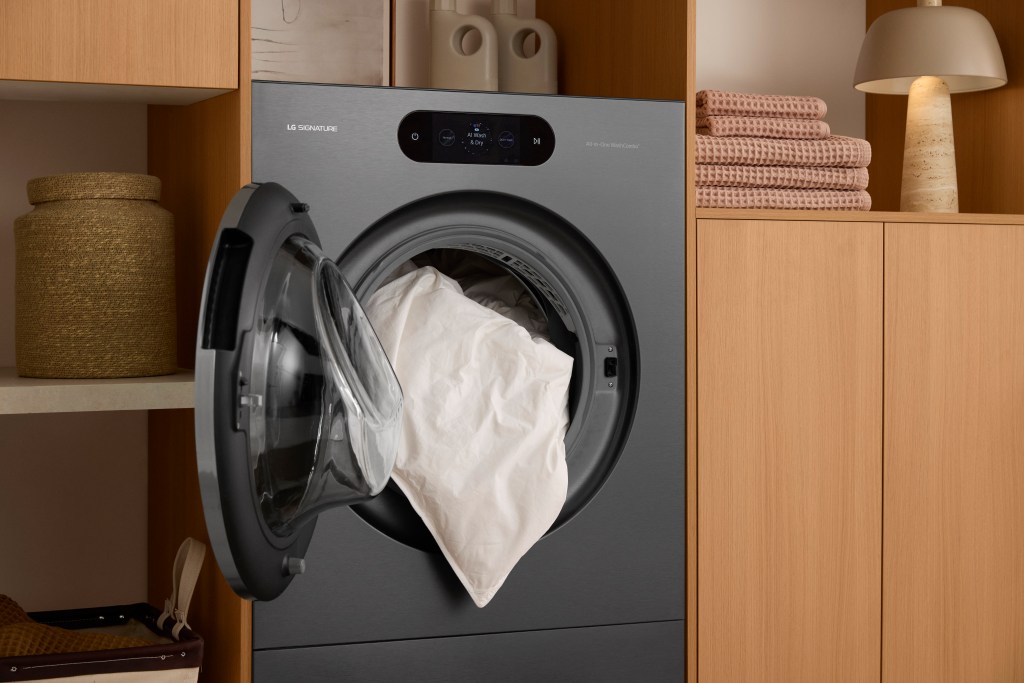
Many newer models also use ventless drying, which can greatly expand where laundry can be installed.
For example, the GE Profile PFQ97HSPVDS is a 4.8 cu. ft. all-in-one model that uses a ventless inverter heat pump. It operates from a standard 120V connection and does not require a traditional dryer exhaust vent. GE says its Quick Wash and Dry cycle can wash and dry a 10-pound load in about 90 minutes.
The Whirlpool WFC682CLW takes a somewhat different approach. It has a 4.5 cu. ft. capacity, ventless design and a Wash & Dry option that Whirlpool says can complete an average sized load in about 3.5 hours.
That difference is important. “Washer dryer combo” describes a category, not one specific type of performance. Cycle times, drying technology, capacity and features can vary considerably between models.
What are the benefits of a washer dryer combo?
You don’t have to transfer the load.
The most obvious advantage may also be one of the most useful.
Put the clothes in before work, before bed or before running errands, and the machine can move from washing to drying by itself. There is no wet load waiting in the washer because you forgot to move it.
And that can save more time than the cycle length alone might suggest. A residential laundry field study found that the median time between the end of a wash cycle and the start of a dryer cycle was 28 minutes. About one-third of loads waited more than an hour before being transferred. With an all-in-one, that in-between time disappears because the drying cycle can begin automatically.
That means a combo with a somewhat longer drying cycle may be closer to a traditional laundry routine in real-world elapsed time than the cycle numbers alone make it seem.
They can save a lot of space and energy.
One appliance takes up roughly half the floor space of a side-by-side pair.
That can make combo machines especially useful for condos, apartments, mudrooms, laundry closets and remodels where every square foot matters.
This can also be helpful in Midwest homes where laundry may be located somewhere other than a conventional first-floor laundry room. Think older Twin Cities homes with basement laundry, a Kansas City condo with limited utility space or a remodel where running a new dryer vent would be difficult.
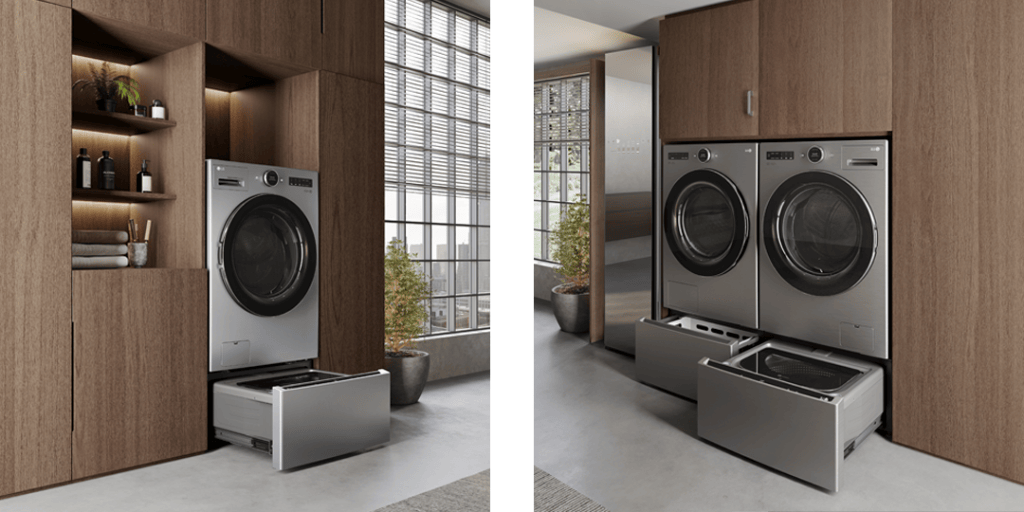
Ventless models provide additional flexibility because there is no traditional exhaust duct running to the exterior.
The electrical requirements can make placement easier, too. Many of today’s heat-pump all-in-one models run on a standard 120-volt connection rather than the 240-volt connection typically required by a conventional electric dryer. That can open up more possibilities when adding laundry to a mudroom, closet, lower level or other space that wasn’t originally designed for it. Always check the electrical requirements for the specific model before planning your installation.
ENERGY STAR says certified heat-pump dryers use substantially less energy than standard dryers and dry at lower temperatures, which can also be gentler on clothing.
That lower temperature drying can feel a little different if you are accustomed to pulling very warm clothes from a conventional dryer. With ventless heat-pump drying, clothes can sometimes feel slightly humid when first removed from the machine, then feel dry after they’re taken out and shaken.
What are the downsides?
The convenience is real, but so are the compromises.
You can only run one load at a time.
With separate appliances, the first load can be drying while the second load is already washing.
A combo cannot do that.
If Saturday morning means towels, sheets, kids’ clothes and three baskets of everyday laundry, a separate washer and dryer can usually move through those loads faster.
This is probably the biggest reason a high-volume household may prefer a traditional pair.
Wash and dry times can vary.
Do not assume every combo finishes laundry in the same amount of time.
ENERGY STAR notes that some newer all-in-one models can wash and dry a load in roughly 1.5 to 2 hours. But manufacturer specifications show how much the actual experience can vary based on the machine, selected cycle and load size.
The GE Profile UltraFast, for example, advertises an approximately 90-minute Quick Wash and Dry cycle for a 10-pound load, while Whirlpool lists about 3.5 hours for an average-sized load using its Wash & Dry option.
The takeaway is not that one number is necessarily better. It is that cycle time should be one of the specifications you compare before buying.
Maintenance matters.
Combining two jobs into one appliance also means keeping the entire wash-and-dry system clean, and this is one area where all-in-one owners need to pay attention.
Lint and other buildup can restrict airflow and affect drying performance, so cleaning the filters on the schedule recommended for your specific machine is important. Depending on the model, that may include a lint filter, foam or condenser filter, drain pump filter or other filter areas.

If drying suddenly seems to be taking longer or clothes are coming out damper than expected, maintenance is one of the first things to check. GE, for example, specifically recommends cleaning its UltraFast Combo’s lint filter periodically and says proper maintenance helps the machine perform at its best.
The maintenance itself isn’t difficult, but it does need to become part of your regular laundry routine. If you know you’re unlikely to keep up with filter cleaning, an all-in-one may not be the best fit.
Combo washer dryer vs separate machines
| Consideration | Washer dryer combo | Separate washer & dryer |
| Floor space | Uses the footprint of one appliance | Requires space for two appliances unless stacked |
| Moving clothes | No transfer needed during a wash-and-dry cycle | Clothes must be moved from washer to dryer |
| Multiple loads | Handles one load at a time | Can wash one load while drying another |
| Venting | Many models are ventless | Depends on the dryer type |
| Best for | Smaller spaces, venting challenges and convenience | Larger households and faster back-to-back laundry |
Who should buy a washer dryer combo?
A combo makes the most sense when convenience or space matters more than maximum laundry throughput.
They can be a particularly good match for one- or two-person households, condos, apartments, smaller laundry rooms, accessory dwelling spaces or anyone who likes the idea of starting laundry once and not thinking about it again until the cycle is done.
Full-size capacities around 4.5 to 4.8 cu. ft. also mean today’s combos are no longer limited to tiny apartment loads.
They can also work well as a secondary laundry machine. For example, you could place one near the kitchen for towels, dishcloths and other everyday loads, or in a mudroom, guest suite or lower level. Because many models are ventless, they can sometimes fit in places where adding a traditional washer and dryer would be more difficult.
For households that want even more flexibility, two all-in-ones side by side can be another option. It’s certainly not the typical setup, but it gives you two drums to work with at the same time. You could run two complete wash-and-dry loads, or wash items that need to air dry in one while another load washes and dries in the other. Many combos can also be set to wash only or dry only, so you’re not required to use both functions every time.
For families that do several loads back-to-back, however, a traditional washer and dryer may still make more sense. Separate machines let you wash one load while another is drying, which can make it easier to keep laundry moving.
What should you check before buying?
Start with the same rule we recommend for any major appliance: measure everything.
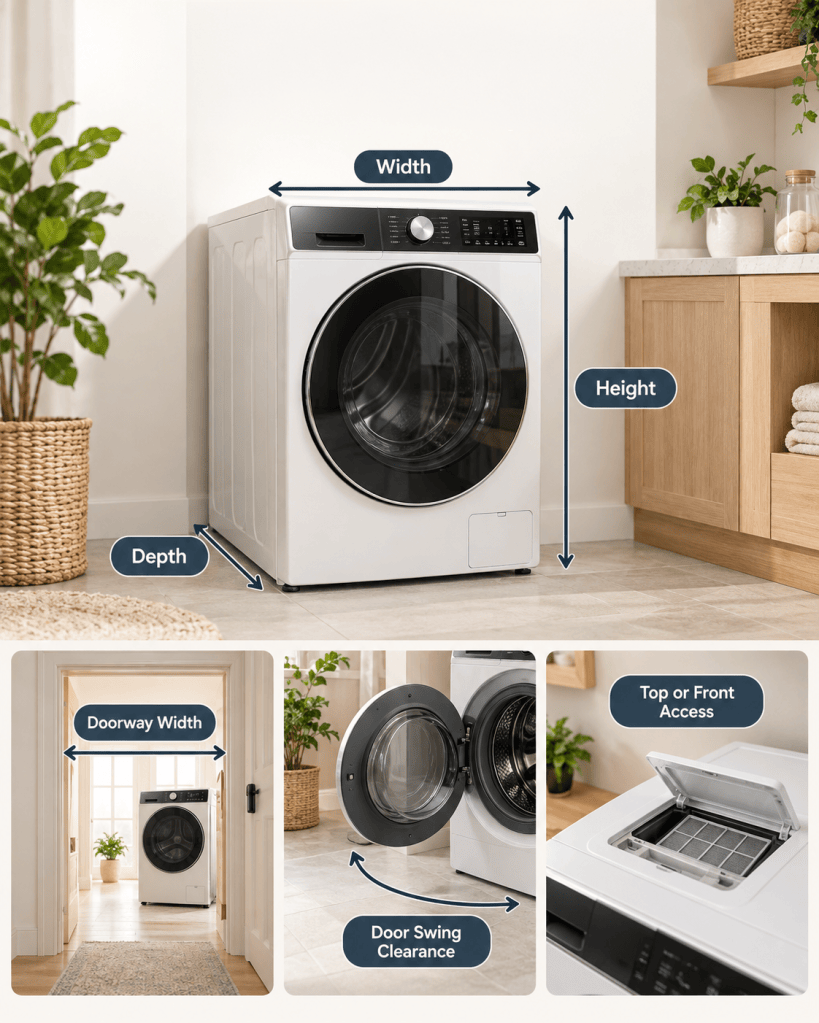
Check the appliance width, depth and height, but do not stop there. Measure the doorway, hallways, stairs and every turn the appliance has to make on its way to the laundry area. You also need enough clearance to fully open the door.
Make sure you can reach the filters. Don’t measure only for whether the appliance will fit. Think about how you’ll maintain it once it is installed.
Filter location varies by model. On the LG WashCombo, for example, the ezLintFilter is located on top of the appliance. Placing the machine tightly beneath a countertop or low shelf could make routine filter cleaning difficult or require pulling the appliance out for access. LG recommends removing the lint from that filter after every load.
Before building cabinetry or shelving around an all-in-one, check the owner’s manual and make sure you have enough clearance to access every filter and maintenance point.
Then confirm your water, drain and electric connections. Ventless does not mean installation-free. It simply eliminates the traditional dryer exhaust vent.
Our laundry planning and measuring guide covers the connections and measurements you should verify before delivery.
So, are washer dryer combos worth it?
For the right household, yes.
Today’s all-in-one machines solve several problems at once. They save space, eliminate the need to transfer wet clothes and, on many models, combine ventless drying with a standard 120V connection that can create more possibilities for where laundry can go.
And while a complete wash-and-dry cycle may take longer than using separate machines, cycle time doesn’t tell the whole story. Because drying begins automatically, you also eliminate the time a finished load might otherwise sit in the washer waiting to be transferred.
But convenience comes with a tradeoff. A single combo cannot wash one load while drying another, and routine filter maintenance is especially important for keeping heat-pump drying performance where it should be. If cleaning filters regularly isn’t something you want to keep up with, a traditional laundry pair may be a better fit.
The best choice comes down to how you actually do laundry. If space is tight, venting or electrical access is difficult, or you really want to press Start once and walk away, an all-in-one washer dryer deserves a serious look.