With a heat advisory in effect today for most of the Twin Cities and reports of a heat index of up to 105 degrees, you might want one of these:

Just saying…
>> Browse window air conditioners
With a heat advisory in effect today for most of the Twin Cities and reports of a heat index of up to 105 degrees, you might want one of these:

Just saying…
>> Browse window air conditioners
Window air conditioners are the most common style of A/C, but — like everything else in appliances — they’re by no means standard.
Depending on your home, you might purchase a casement air conditioner or a wall air conditioner instead.
Casement air conditio
ners (also known as slider casement air conditioners) are very similar to window units, but they’re designed for framed windows with a sliding sash or metal casement. Casement air conditioners are tall and thin as opposed to traditional window units, which are short and wide.
In general, casement air conditioners cost more than traditional window units and offer less selection.
Wall air conditioners, you guessed it, go into a wall cutout. Air and moisture vent through their back, unlike window and casement window units, which exhaust air and moisture out both the sides and the back.
Window air conditioners are NOT appropriate for use in a wall application, as the compressor could burn out from improper ventilation and moisture build-up could cause mold in
the walls.
Wall air conditioners also are generally more expensive than window units, as they are more of a specialty product.
But if you don’t like the look of a air conditioner hanging out of your window or if you dislike reinstalling your window unit every year, getting a wall unit cut in to your house could be the answer.
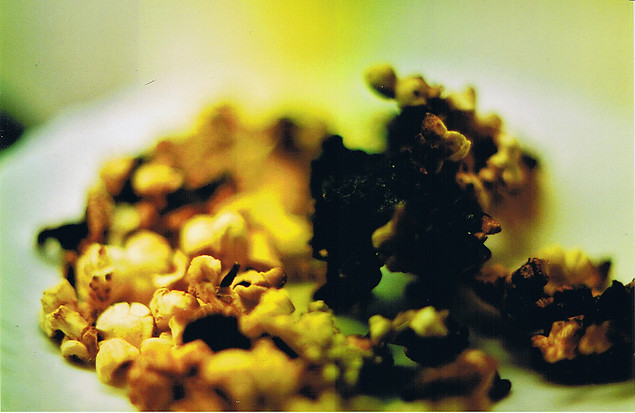
Burnt popcorn smell lingers in microwaves so badly, an office I worked in banned it from the break room. It’s notorious, but completely removable.
If your microwave harbors its own dirty Pop Secrets, try this cleaning tip we got from Frigidaire (hat tip to Sarah from our Customer Service Department):
Microwave Odor Removal
You’ll need:
Combine together in a 2-cup glass measuring cup and boil for several minutes in the microwave on full power. Allow hot mixture to sit in the microwave until cool. Wipe interior with a soft cloth.
Though this tip wasn’t specifically written for burnt popcorn, I can’t think of much else that smells up a microwave. Help me out in the comments below!
We turn this:
Into this:
OK, so it’s not exactly magic, but that 2-feet-long area highlighted by the green bar is the product of those three boxes of cardboard waste. Pretty amazing, huh?
We think so. That’s our new densifier, which grinds up the bulk Styrofoam from appliance packaging and converts it into a form that can be reused as another product, while reducing it by a 20:1 ratio. Waste Management used to haul off our 40-yard waste roll-off container about every four days. Now, we’re down to about once per month!
The process is EXTREMELY labor intensive. The Styrofoam must be completely clean for the densifier to work properly. This means no tape, no staples and no cardboard pieces.

This is all the Styrofoam we've "densified" since we got the machine in mid-November. Multiply this air space by 20 and that's what the pre-densified material would take up!
Appliance and cardboard recycling have been a part of our mission for many, many years — but we wanted to do more, my uncle Bob Warner said (he’s leading Warners’ Stellian’s recycling efforts). “We’re moving beyond recycling pop cans. Whatever we generate that we can recycle, we’re doing.”
This includes:
We’re proud of the fact that we’re WAY ahead of the curve for an independent retailer of our size.
Last month, a vice president of Frigidaire/Electrolux toured our warehouse here in St. Paul and commented that only two or three facilities on par with ours exist in the independent network nationwide.
“It’s very labor intensive to sort, and it’s not a profitable endeavor — especially at this point — for us,” Bob told me. “But the motivating factor is doing the right thing.”