


Midwest summers may not last forever, but when the heat and humidity arrive, a dependable air conditioner makes a big difference.
Choosing a new cooling system involves more than finding an air conditioner that fits your budget. The right system should match your home, ductwork, comfort needs and long-term energy goals. It also needs to be sized and installed correctly to perform the way it should.
Whether your current AC has stopped working or you are planning ahead, here is what to consider before replacing your air conditioner. For a deeper look at system types, efficiency ratings, costs and installation, explore our complete Air Conditioner Buying Guide.
What type of air conditioner is best for your home?
The best cooling system depends largely on your home’s existing setup.
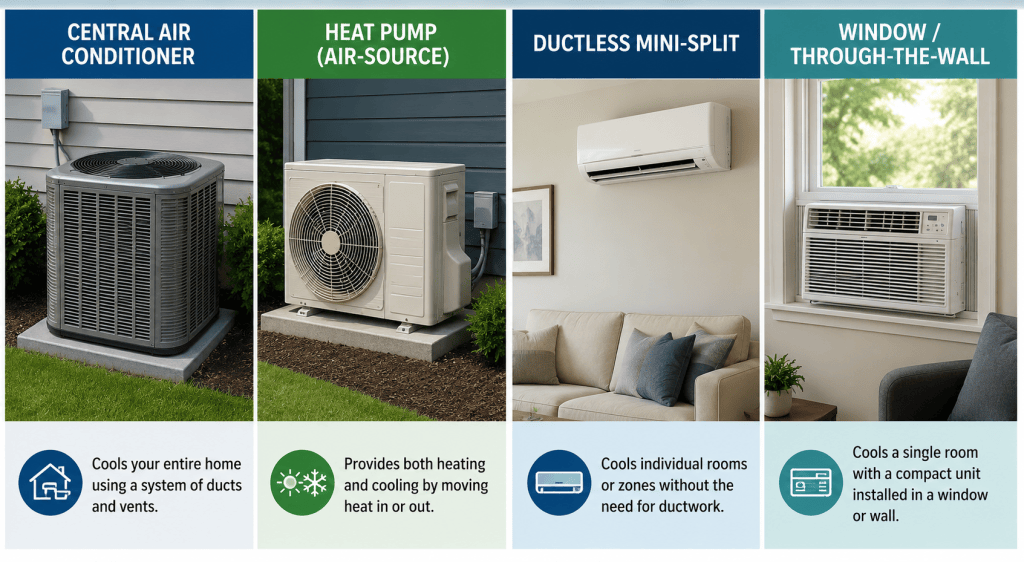
A traditional central air conditioner is often the most straightforward choice for a home with forced-air ductwork. A heat pump may be a good fit when you want one system that can provide both heating and cooling. A ductless mini-split can cool homes, additions or individual rooms without requiring traditional ducts.
The best option is not necessarily the largest or most expensive system. It is the one that is properly matched to your home and the way you use it.
Should you repair or replace your air conditioner?
Not every AC problem means you need a completely new system. A repair may make sense when the problem is isolated, the system has otherwise been reliable and it continues to cool your home evenly.

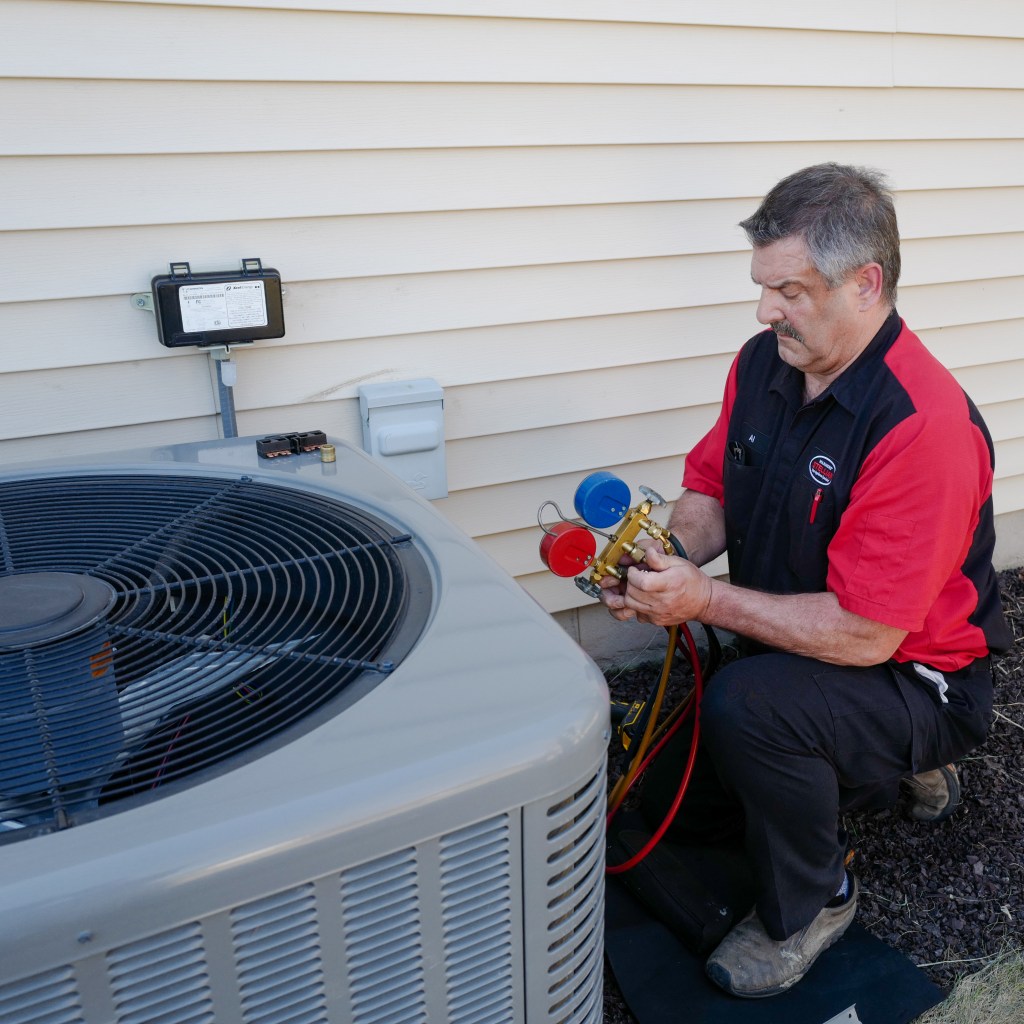
Replacement may be the better long-term decision when:
- Your current system is approaching the end of its expected lifespan.
- Your air conditioner needs frequent or increasingly expensive repairs.
- Certain rooms never feel comfortable.
- The system struggles to maintain the temperature you set.
- Your cooling bills have increased without a clear explanation.
- The equipment is noisy, cycles constantly or regularly breaks down.
Most central air conditioning systems last approximately 12 to 15 years, although professional maintenance, installation quality and usage can all affect a system’s lifespan.
Age alone should not determine your decision. A dependable older system may still have useful life left, while a poorly performing newer system may need a closer inspection.
Understanding your air conditioning options

Central air conditioning
Central air is a common choice for Midwest homes, especially those with an existing forced-air furnace and ductwork. An outdoor unit cools the air, while the furnace blower distributes it throughout the home.
Central air may be a good fit when:
- Your home already has compatible ductwork.
- You want consistent cooling across multiple rooms.
- You prefer one centrally controlled system.
- Your furnace and indoor components can be matched with the new AC.
This type of system can be especially helpful during hot, humid Midwest summers because it cools the home while also removing moisture from the air. However, the condition of your ductwork matters. Leaks, poor airflow and improperly sized ducts can make even a high-efficiency system feel ineffective, particularly in older homes.
Air-source heat pumps
An air-source heat pump cools your home much like a central air conditioner during the summer. In cooler weather, it reverses operation to bring heat into the home.
For Midwest homeowners, a heat pump can be installed as a ducted system or paired with a furnace in a dual-fuel setup. This allows the heat pump to handle milder temperatures while the furnace provides additional heat during periods of extreme cold.
A heat pump may be worth considering when you:
- Want heating and cooling from one system.
- Are replacing both an aging AC and heating system.
- Want to reduce your use of traditional heating fuels.
- Are interested in energy-efficient equipment.
- Want greater flexibility across changing Midwest seasons.
The right setup depends on your home, existing furnace, electrical capacity and how the equipment performs in colder temperatures.
Ductless mini-split systems
Ductless mini-splits can be a practical option for older Midwest homes without existing ductwork or for spaces that are difficult to keep comfortable. An outdoor unit connects to one or more indoor units mounted on a wall or ceiling.
These systems are often used in finished attics, home additions, converted garages, sunrooms and upper-level bedrooms that become especially warm during the summer. Many models provide both heating and cooling.
A mini-split may be a good choice when:
- Your home does not have ducts.
- Extending existing ductwork would be difficult.
- You are finishing an addition or previously unconditioned space.
- One area of your home stays warmer or colder than the rest.
- You want separate temperature settings for different zones.
Window and through-the-wall air conditioners
Window and through-the-wall air conditioners can be practical for cooling a single room, apartment or smaller Midwest home. Window units are installed in an open window, while through-the-wall models fit into a permanent wall sleeve.
These systems may be a good choice when:
- You only need to cool one room.
- Central air or ductwork is not available.
- You want a lower upfront cost.
- You need extra cooling in a bedroom, office or upper-level space.
They can be especially useful during short periods of intense summer heat. When comparing units, consider the room’s square footage, energy-efficiency rating, noise level and installation requirements. Proper sizing is important because a unit that is too large or too small may cool unevenly or struggle to control humidity.
Why proper AC sizing matters

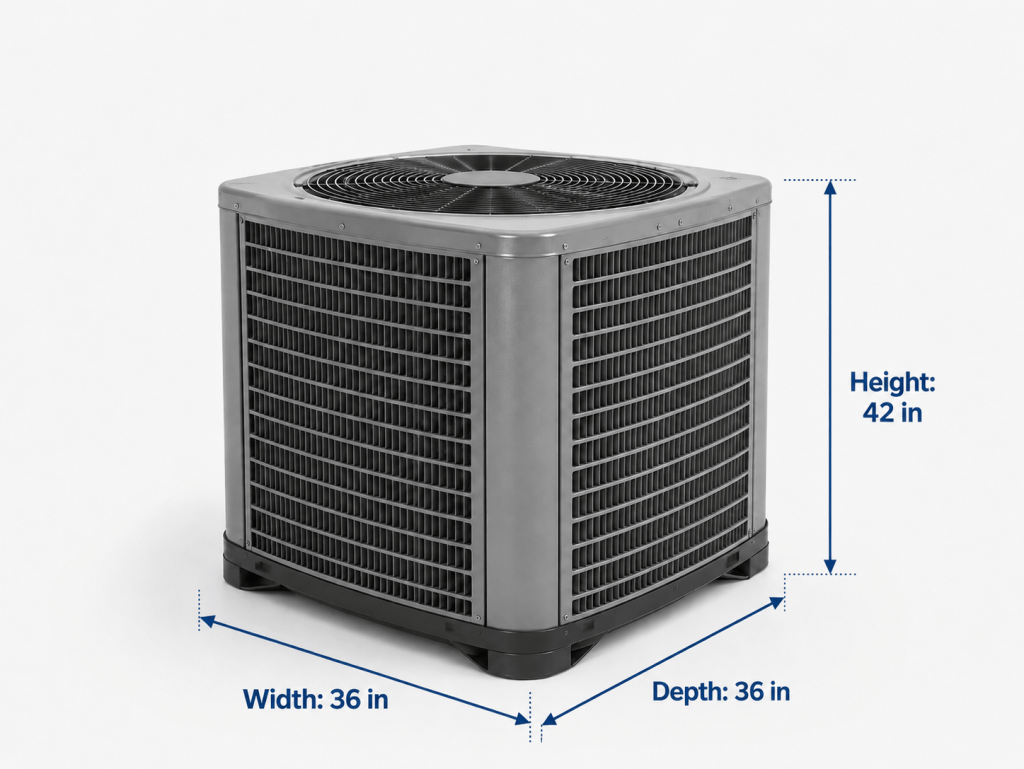
Air conditioners are often described by their cooling capacity, but bigger does not automatically mean better.
An oversized air conditioner may cool your home too quickly and shut off before it has removed enough humidity. This short cycling can create uneven temperatures, unnecessary wear and a home that feels cool but still damp.
An undersized system may run almost constantly while struggling to reach the desired temperature.
A professional cooling-load calculation considers more than square footage. It may account for:
- The home’s size and layout
- Insulation levels
- Window size and direction
- Air leakage
- Ceiling height
- Number of occupants
- Sun exposure
- Existing ductwork
- Heat created by appliances and electronics
The Department of Energy recommends sizing heating and cooling equipment based on calculated heating and cooling loads rather than simple rules of thumb. Oversized systems can waste energy and cycle too frequently, compromising both comfort and efficiency.
What does SEER2 mean?
SEER2 measures how efficiently an air conditioner or heat pump cools your home. A higher rating generally means the system uses less energy to provide the same amount of cooling.
For Midwest homeowners, the best SEER2 rating depends on more than efficiency alone. Consider how often you use air conditioning, how well your home is insulated, the condition of your ductwork, available rebates and how long you plan to stay in the home.
Because Midwest summers can be both hot and humid, multi-stage and variable-speed systems may also be worth considering. Their longer, steadier cooling cycles can help maintain more consistent temperatures and better humidity control.
What should homeowners know about new AC refrigerants?
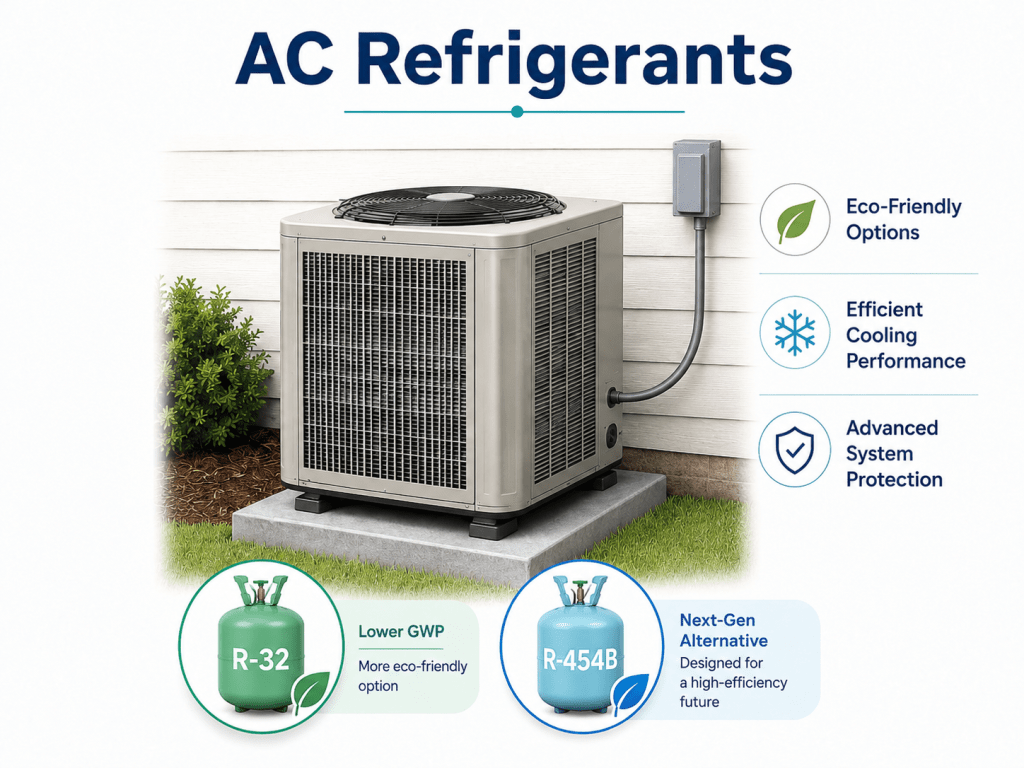
The heating and cooling industry is moving toward refrigerants with lower global warming potential. Many newer air conditioners and heat pumps now use refrigerants such as R-32 or R-454B instead of R-410A.
For Midwest homeowners, that matters because cooling equipment has to handle hot, humid summers and, in the case of heat pumps, colder seasonal conditions as well. Choosing equipment designed for the region and installed correctly is just as important as the refrigerant it uses.
An existing R-410A system does not need to be replaced simply because newer refrigerants are available. When comparing systems, ask which refrigerant the equipment uses and whether the contractor is trained and equipped to install and service it properly.

Should you replace your AC and furnace together?
A central air conditioner and furnace often share components, including the blower and indoor coil. Replacing both systems at the same time can make sense when they are similar in age or when the existing furnace is not compatible with the performance features of the new air conditioner.
Replacing both may provide:
- Better compatibility between components
- Improved airflow
- Greater energy efficiency
- More consistent comfort
- One installation timeline
- Equipment warranties that begin at the same time
However, replacing both is not always necessary. When the furnace is still dependable, properly sized and compatible with the new cooling system, replacing only the AC may be the more practical choice.
A professional evaluation can help determine whether keeping part of the existing system will affect the new equipment’s efficiency, comfort or warranty coverage.
Questions to ask before choosing an AC system
Before approving an air conditioner installation, ask your heating and cooling professional:
- How was the recommended system size calculated?
- Is my current ductwork properly sized and sealed?
- Are the indoor and outdoor components a matched system?
- What SEER2 rating makes sense for my home?
- What type of refrigerant does the system use?
- What is included in the installation price?
- Are permits, electrical work and disposal included?
- What manufacturer and labor warranties apply?
- Does the system qualify for current rebates?
- What maintenance will it require?
A reputable professional should be able to explain the recommendation in plain language and show how it relates to your home, comfort goals and budget.
How to help your new air conditioner perform better
Even the best air conditioner cannot overcome every problem in a home. You can support comfort and efficiency by:
- Replacing or cleaning filters regularly
- Scheduling professional maintenance each year
- Keeping outdoor equipment clear of leaves and debris
- Sealing leaking ducts
- Improving insulation and air sealing
- Using a compatible programmable or smart thermostat
- Keeping supply and return vents open and unobstructed
- Closing blinds or shades during the hottest part of the day
Professional installation is especially important. Proper equipment sizing, refrigerant charging, airflow and ductwork can all affect energy consumption, performance and system life.
Frequently asked questions about replacing an air conditioner
How long does a central air conditioner usually last?
Most central air conditioning systems last around 12 to 15 years. Maintenance, usage, climate, installation quality and repair history can shorten or extend that timeframe.
Can a heat pump work in the Midwest?
Yes. Modern air-source heat pumps can provide both heating and cooling in cold climates when the equipment is selected and installed correctly. Some Midwest homeowners use a heat pump with a furnace in a dual-fuel system, allowing the system to switch heating sources based on outdoor conditions.
Do I need ductwork for air conditioning?
Traditional central air conditioning generally uses ductwork. A ductless mini-split does not, making it a potential option for older homes, additions and individual areas that are difficult to reach with conventional ducts.
Is a higher SEER2 rating always worth the cost?
Not necessarily. Higher-efficiency equipment can use less energy, but the financial benefit depends on the system price, how often you use it, your utility rates and how long you plan to own the home.
How often should an air conditioner be serviced?
Professional maintenance is generally recommended once a year, ideally before the cooling season. Annual service can help identify developing problems, support efficient operation and reduce the risk of a breakdown during hot weather.
Get help choosing the right air conditioner
The right air conditioner should do more than produce cold air. It should cool your home evenly, control humidity, operate efficiently and fit your long-term plans.
Warners’ Stellian provides air conditioner repair, replacement and installation throughout Minneapolis, St. Paul and surrounding Twin Cities communities. Our heating and cooling team can evaluate your current system, explain your options and help you choose equipment that fits your home and budget.
Ready to explore your options?
Get an instant online AC quote, schedule an appointment with our heating and cooling team or visit our complete Air Conditioner Buying Guide to learn more.