


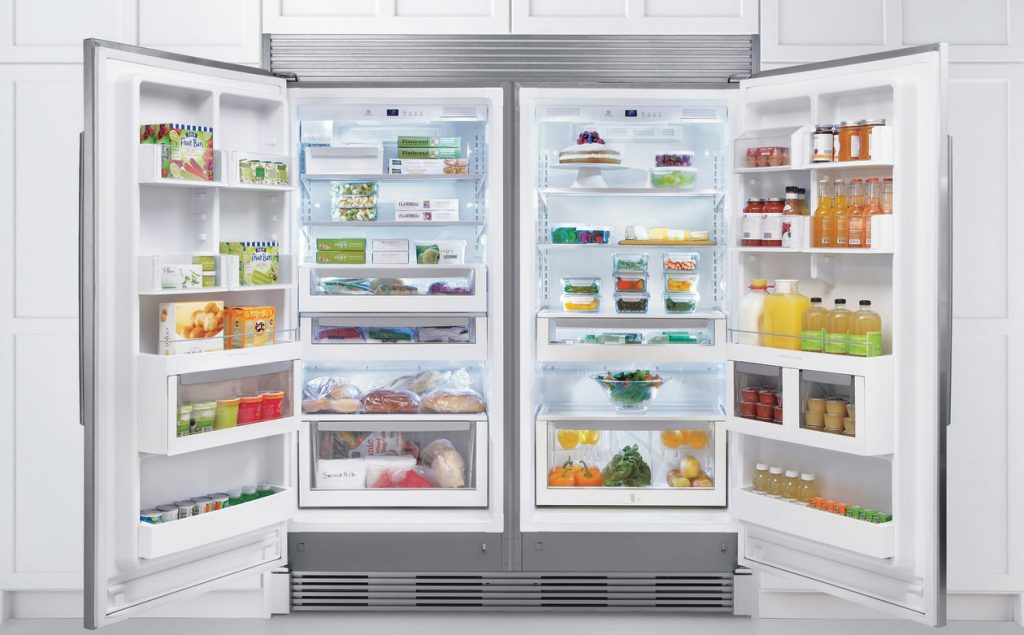
Power outage? Don’t get left in the dark on whether your food is safe to eat. Allow us to shed some light on the ins and outs of food safety during power outage situations.
Power Outage Preparation
An ounce of prevention is worth a fridge full of food. Be prepared for power outage emergencies with the following tips:
- Invest in appliance thermometers for your refrigerator or freezer if they don’t come equipped with them already.
- Keep frozen containers of ice in the freezer. Not only does this help the freezer stay cool, but in the event of a power outage, the ice will keep food colder in the freezer, refrigerator or a cooler. As an added bonus, you get cold, fresh drinking water as it melts.
- Have coolers on hand to move perishable foods into if needed.
- Stay stocked up on ice.
Want to be extra prepared? The Frigidaire Gallery Upright Freezer/Refrigerator allows you to switch from refrigerator to freezer as your cold storage needs changes. With ArcticLockTM walls, food stays frozen for more than two days in power outage events.


When the Power Goes Out
If you can, call the power company asking how long the power outage is expected to last. This will help you determine whether you need to take action to save your food. Keep the refrigerator and freezer doors closed during a power outage. Anytime you open the door, you release the cold air and allow warm air to make its way in.
Freezer Tips
The recommended freezer temperature is zero degrees. According to the FDA, a full freezer will keep its temperature for 48 hours as long as the door remains closed. For a half-full freezer, cut that time in half.
Whirlpool Corp recommends using 2 pounds of dry ice in the freezer for every cubic foot of freezer space to keep the food frozen 2 to 4 days.
How do you know if the food is safe after the power comes back on? If the temperature reads 40 degrees or lower, your food should be safe. Don’t know the temperature? If food contains ice crystals, it’s safe to refreeze (although quality/flavor may be compromised).
Refrigerator Tips
The recommended refrigerator temperature ranges from 35 to 38 degrees. According to foodsafety.gov, your refrigerator contents should be safe as long as the power outage lasts no more than 4 hours. However, you must discard any perishable foods that are left in temperatures higher than 40 degrees for 2 hours or longer. If you have perishables you want to keep safe longer, move them into the freezer or a cooler with ice. If you are unsure which foods are considered perishable, consult this handy chart.
When it comes to food safety, better safe than sorry. We operate by the rule of thumb: When in doubt, throw it out!
This is an updated version of an article previously published on Jan. 5, 2011.
Images via Whirlpool