Hard Water Wastes Your Energy and Detergent

If you’re not ecstatic about the performance of your dishwasher and/or washer, don’t immediately blame your machine. There could be something in the water.

Using a water softener can cut detergent use in washers and dishwashers by more than half and lower washing machine temperatures from hot to cold, as shown by two independent studies released in the last two years.

Less detergent and cold water achieved the same stain removal in washing machines using softened water as double the detergent and hot water in hard water. And dishwashers using softened water needed less than half the detergent if used in areas having very hard water (Minnesota is among areas with the hardest water), while achieving the same results.

stainremoval

Plus, the study showed that untreated hard water can cause significant efficiency losses and added costs in water heating – up to 48% in some cases. In addition, hard water was found to rapidly lead to clogged shower heads, in some cases possibly as soon as a year and a half.

After just one week of constant testing with hard water, more than three-fourths of shower head nozzles became clogged, according to laboratory results. Shower heads using softened water, meanwhile, performed nearly as well as on the day they were installed.

If it sounds like you have hard water, our local guys, Water Doctors, can diagnose your water and if necessary, customize a water treatment system for your home.
Laundry Room Ideas that Do Double Duty

Because it’s the sole unfinished room in my house, my laundry room is my project in waiting.

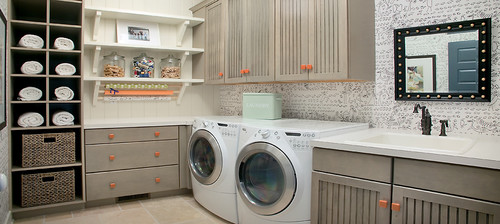
I love browsing laundry room ideas for inspiration, and my favorites incorporate multiple purposes into an otherwise underused space.

Now that washers and dryers are less noisy, people don’t mind setting up a gift-wrapping station into laundry room shelves. You might see a craft or scrapbooking station among laundry room cabinets and decor. Some people are even including laundry into mudrooms and bathrooms. I say it’s smart!

Check out these laundry room photos I grabbed (mostly from houzz.com) exemplifying some multipurpose room ideas.

Laundry Room traditional laundry room
Not only is a laundry room counter a great place to fold clothes, but it’s also ideal for wrapping presents.
Willowgrove Laundry Room contemporary laundry room
I’m a sucker for black and white, so I love this mudroom/laundry room. So clean.
Case Design/Remodeling, Inc. eclectic laundry room
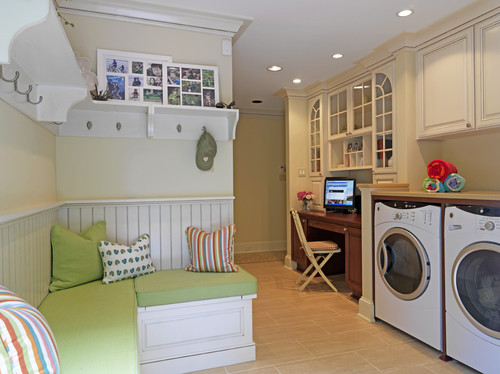
Tuck a small office space next to your laundry to kill two to-do list birds with one stone. I especially like that the office chair can fold up easily.
Master bath / laundry eclectic laundry room
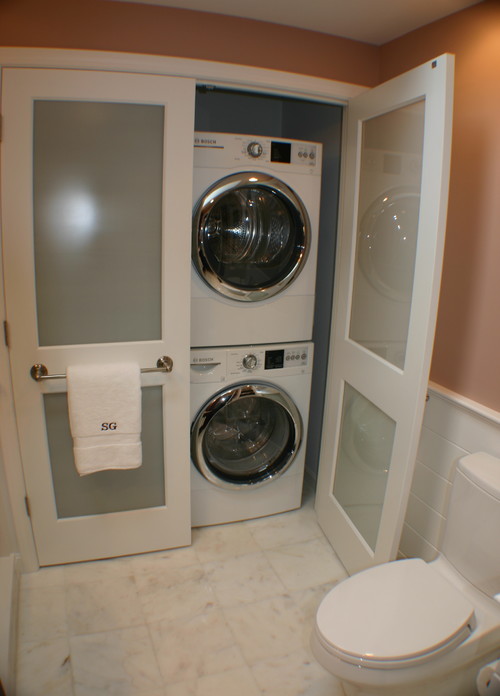
Why devote an entire space to doing laundry when most front-loading washer and dryers stack easily to hide in a bathroom cabinet?
No 2 contemporary laundry room
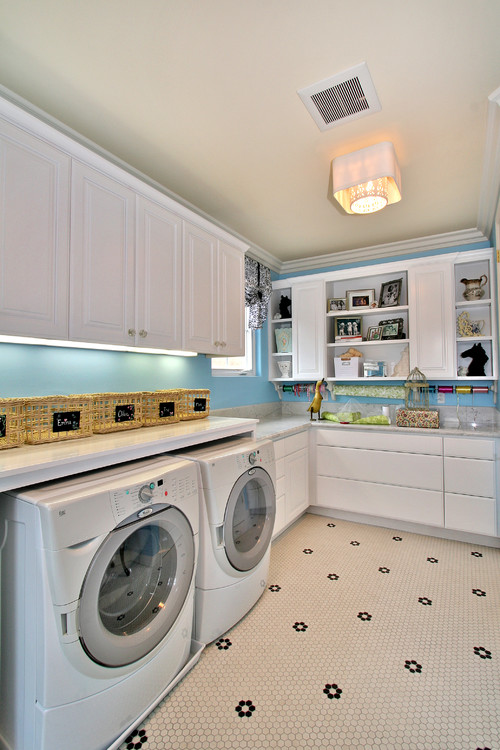
Another laundry room with a gift-wrapping station, but a bit brighter this time. I love the hexagon tile on the floor 🙂
inspiration contemporary laundry room
Another bathroom/laundry room, but a countertop acts as a supplies shelf and folding station this time.
woodlawn residence traditional laundry room
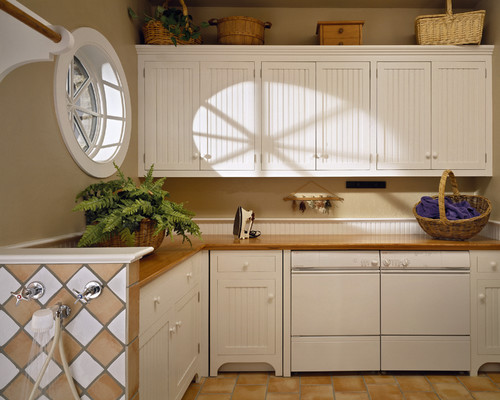
Clean your pets while you clean your clothes!
Modern Laundry Room by Normandy Builders modern laundry room
I believe that the washer and dryer are tucked in these cabinets? It also includes a gift-wrapping station and gardening center.

Haven’t you always wanted a corner office?

Center Street Mudroom traditional entry
Mudroom with peak-a-boo stacked laundry.

This laundry room, while less chic, makes space for everything in cute, colorful containers and includes a counter space for folding, wrapping and crafting.

Washing machine smells? Stop shutting the door

Eww, your washing machine is stinky.

If you’re suffering from clothes washer odor, the solution could be as simple as leaving the front door open.

Front load washers clean better, use less water and energy and treat clothes more gently, but they’ve earned a smelly reputation. A frontload washer necessitates an airtight seal on the washer door to prevent water from leaking all over your floor. But the lack of airflow breeds that mildew-y odor in a washing machine.

Simple solution? Leave the door open after wash cycles, and teach your family to do the same. Then,  water remaining in a front loading washer following a cycle can dry out and you’ll go back to having the best washer ever.

To eliminate existing washing machine smells, try cleaning the washing machine with Affresh or run a vinegar cycle on the hottest setting.

Why HE Detergent Is a Must

sudsMore laundry detergent does NOT mean more clean, especially in a front-loading high-efficiency washing machine.

High-efficiency washers use far less water by design than traditional washing machines. Less water and more powerful wash action means less dilution of detergent, leading to overproduction of suds.

High-efficiency detergent (or HE detergent) provides the just right amount of suds to ensure the cleanest clothes possible. HE detergent is labeled “concentrated” or “2x”.”

Make sure to follow the instructions on the label based on load size. And note that tablet laundry detergent isn’t recommended by manufacturers because of issues dissolving in the washer dispenser.

If you don’t use HE detergent,Whirlpool Corp. warns of the following problems:

  • Poor cleaning results.
  • Detergent residue left on clothing.
  • Washer odor due to sudsing residue.
  • Wet clothes at the end of the cycle due to excess suds hindering spinning and draining.
  • Leaking due to excess suds.
  • Extended cycle times or excessive water usage from extra rinsing to remove suds.
  • Error codes.

So remember, less is more.

Washer vibration leaving your laundry room all shook up?

built_in_washer_bi

Asko, whose latest designer series is pictured, designed its front-load laundry for main-floor applications from the start. Other manufacturers took a while, but most problems have been worked out.

Front-loading washers have been available long enough now that we’re replacing more and more first generation units of the now ubiquitous style of washing machines.

Front-loader washers clean better, use less water and (my favorite feature) spin more water out of the clothes with spin speeds around 1200 RPMs. But all those rotations made some customers’ experience with the earliest models a bit, well, shaky.

The washer would vibrate. It would move. Customers would call and say, “My washer is walking across the floor!” Things would fall off the walls. I heard of an extreme case in which a customer’s sheetrock shook loose.

laundrymainflrOf course, it wasn’t solely the washers’ fault. People pulled washers and dryers out of the basements they were designed for, reinforced with their sturdy concrete block, and put them where they were never supposed to go: upstairs. Empty nesters converted their children’s former closets on the second floor and ended up chasing runaway machines. Families tucked laundry units into main floor kitchens without reinforcing the floors.

The problems were real for some. Fortunately, those problems came out in the wash (rimshot, please?) as most manufacturers since beefed up the suspensions of front-load washers.

So your friends’ warnings about front-load washers likely are moot dangers. You should still reinforce the floors if you’re converting a space for laundry, and if so, pedestals might not be the best bet*, but several manufacturers now guarantee that you’ll be happy putting their front-loader on your main floor.

If your existing washer is on the move, pick up a vibration isolation pad, like ShakeAway, at your local appliance parts dealer. I like Dey Appliance Parts, because I’ve had the number to its Snelling Avenue outfit memorized for about eight years now: (651)647-0171.

WTS430*Miele’s pedestals attach to the laundry units with bolts, making it the safest bet for elevated laundry on uncertain surfaces